
Nine Things You Can Fix This Weekend for Under $200
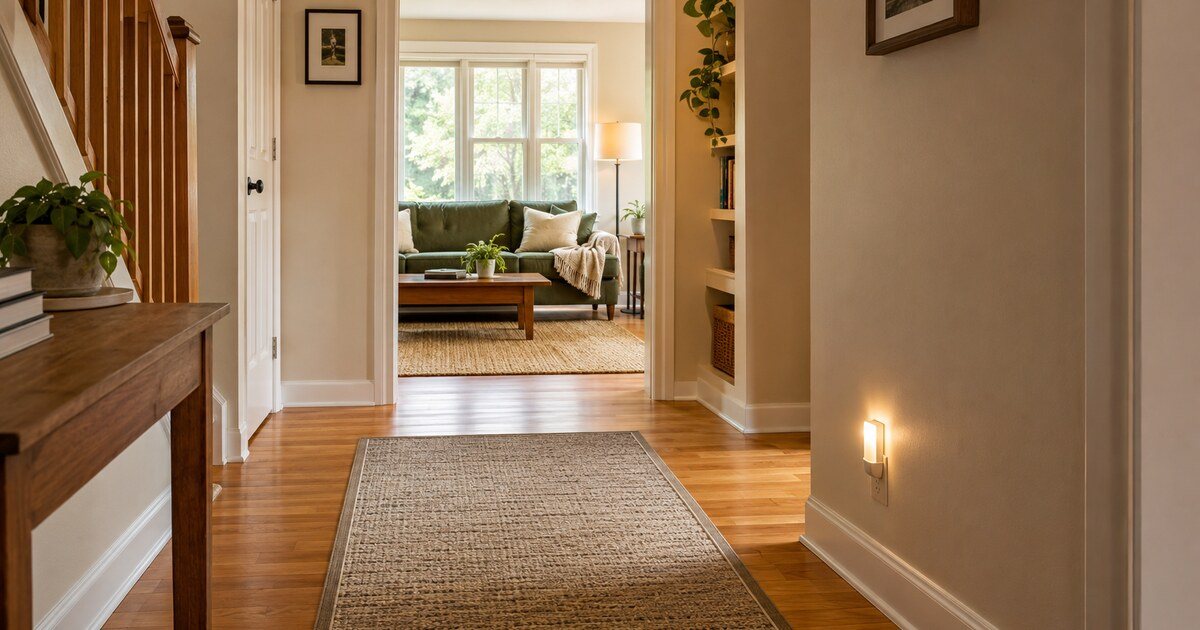
You do not need a contractor to remove many common home hazards. With a free afternoon and a targeted shopping list, most households can secure rugs, reroute cords, improve lighting, mark steps, and clear walking paths for less than $200.
That is not a guarantee that every option below totals under $200. Visible house numbers alone can cost as much as $300 if electrical or custom work is involved. The budget works when you choose the simple versions and focus first on the hazards present in the home.
CDC’s home fall-prevention checklist starts with similarly ordinary changes: clear walking paths, remove or secure throw rugs, move cords, improve lighting, and repair unsafe stairs. (CDC Check for Safety)
1. Secure Every Rug Edge: $5–$30
Walk the perimeter of every rug and look for curled corners, movement, and edges that catch a shoe, walker, or cane.
Use rug tape or a nonslip pad sized so it does not protrude beyond the rug. If the rug remains unstable, remove it. Sentiment does not make a moving rug safer.
Time: 10–20 minutes per rug.
2. Replace Loose Bathroom Rugs: $10–$40 Each
Bathroom rugs combine water, smooth flooring, and hurried movement. Replace loose or absorbent rugs that slide with low-profile, rubber-backed versions that lie flat.
Research using national injury data found that the bathroom was the most common home location for fall injuries associated with rugs and carpets among adults 65 and older. (CDC-hosted study)
Time: 10 minutes.
3. Clear the Porch Approach: Free
Stand at the street or driveway and trace the actual route to the front door. Move planters, chairs, hoses, packages, and decorations out of the walking line. Trim anything that narrows the path or hides a step edge.
Do not judge the porch while standing still in daylight. Check it while carrying a bag and again after dark.
Time: 20–45 minutes.
4. Get Cords Out of Walking Paths: $5–$30
Move lamps or furniture so cords reach outlets without crossing the route through a room. Where a crossing cannot be eliminated, use a low-profile cord cover secured for the floor type.
Never hide an extension cord beneath a rug. It conceals the trip hazard and can create heat or wear problems.
Time: 15–30 minutes per room.
5. Mark Step Edges With Contrast Tape: $5–$30
If the first or last step visually disappears into the landing, add durable contrast tape to make the edge easier to distinguish. Clean and dry the surface first, follow the product’s installation instructions, and do not create a raised edge that becomes its own hazard.
Contrast matters most where flooring colors blend or lighting changes sharply.
Time: About 30 minutes.
6. Mark Floor Transitions: $10–$80
Door thresholds and changes between flooring materials can be difficult to see, especially when similar colors meet. Use a secure contrast strip where a transition is visually unclear.
A marking strip does not repair an uneven threshold. If the transition is loose, raised, or damaged, it needs repair.
Time: 20–45 minutes.
7. Add Dusk-to-Dawn Exterior Lighting: $15–$60
Replace a suitable exterior bulb with a dusk-to-dawn model or add a compatible sensor. The goal is automatic light at the entrance without requiring someone to find a switch while approaching the house.
Confirm that the fixture is rated for the bulb and location. If wiring or the fixture itself needs work, stop and use a qualified electrician.
Time: 10–20 minutes for a compatible bulb.
8. Make House Numbers Visible at Night: $20–$300
House numbers are not decoration. They help emergency responders find the right address.
Choose large, high-contrast numbers visible from the street in both directions. Remove branches or decorations that block them. Test visibility from a vehicle after dark.
A basic reflective set may cost $20–$50. Illuminated or custom numbers can push the project above $200, so this is the item that may break the article’s headline budget. Start with readable reflective numbers if cost is the constraint.
Time: 30–60 minutes for a basic installation.
9. Replace Round Knobs With D-Pulls: $2–$8 Each
Round cabinet knobs require grip and twisting. D-shaped pulls allow fingers to hook behind the handle and may be easier for someone with reduced hand strength or arthritis.
Measure the existing hole spacing before buying. Reusing existing holes keeps the job quick and avoids patching cabinet fronts.
Time: 3–5 minutes per handle.
A Practical Under-$200 Shopping List
| Item | Lean budget |
|---|---|
| Rug tape or nonslip pads | $20 |
| One rubber-backed bathroom rug | $20 |
| Cord covers | $20 |
| Contrast tape and transition strips | $25 |
| Dusk-to-dawn bulb | $20 |
| Reflective house numbers | $30 |
| Six D-pulls | $24 |
| Example total | $159 |
Your home may need only three of these items, or it may reveal a repair that does require a professional. The point is to spend against actual hazards, not complete a generic shopping list.
What This Weekend List Cannot Do
These fixes require no design drawings and little or no permission. That is their strength and their limit.
They do not tell you whether a grab bar has structural backing, whether a stair rail is correctly installed, whether a doorway will accommodate mobility equipment, or whether a bathroom layout supports safe transfers. Those questions depend on the house and the person using it.
For bathroom projects, see what bathroom safety modifications actually cost. For a broader review, the home assessment covers 53 conditions specific to the property.